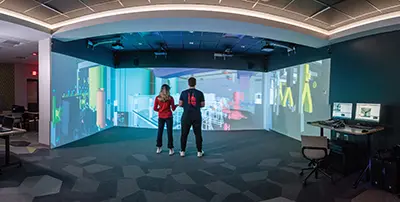
The Forensic Science degree program prepares students for careers in crime scene investigations, crime laboratories, trace evidence examination, and commercial laboratories. Students learn the application of science to law.
Lasell offers the only FEPAC accredited Forensic Science bachelor's degree program in Massachusetts and is one of only two programs in New England. FEPAC accreditation is a prestigious distinction held by only 31 institutions nationwide. While the program remains fully FEPAC accredited, as of September 6, 2024 it is currently on probation. Under the leadership of Program Chair Beth Saucier Goodspeed, a seasoned professional with 24 years of experience, the program continues to thrive and anticipates regaining full FEPAC accreditation.
Students take a wide range of courses in both the traditional sciences and criminal justice. Applied coursework is focused on conducting criminal investigations, quality assurance, collection and preservation of evidence, and analysis of evidence.
Coursework involves the use of case studies, field experiences, and mock crime scene scenarios as a means of using our connected learning philosophy to reinforce theory and concepts learned in the classroom.
From your first day, you’ll take courses in your major and advance towards graduation with a yearly plan. Not sure what classes to take? We’ll help you create the perfect plan.
This example four-year plan is provided as a broad framework that you can follow in order to complete your degree within four years. Be sure to always consult your academic advisor before registering for classes.
This example four-year plan is provided as a broad framework that you can follow in order to complete your degree within four years. Be sure to always consult your academic advisor before registering for classes.
At Lasell, Faculty in the Forensic Science Program are dedicated to providing students with everything they need to become a successful forensic science practitioner after graduation. The Forensic Science Program is home to 94 students as of September 2025. 60% of students enrolled in the Forensic Science Program with the Fall 2024 cohort retained into their sophomore year, as well as 73.3% of students who enrolled in the Forensic Science Program with the Fall 2023 cohort have stayed with the program into their junior year. Additionally, 75% of students who began the Forensic Science program with the Fall 2022 cohort remained in the program into their senior year and 28.6% of students in the Fall 2021 cohort graduating within four years.100% of students who started the Forensic Science program in the 2020 cohort graduated within 4 years.
For a complete list of courses and learning outcomes, view the Academic Catalog >>
| Class Level | 2021-22 | 2022-23 | 2023-24 | 2024-25 | 2025-26* |
|---|---|---|---|---|---|
| Freshman | 8 | 15 | 30 | 34 | 38 |
| Sophomore | 10 | 3 | 12 | 27 | 17 |
| Junior | 5 | 7 | 5 | 13 | 28 |
| Senior | 7 | 4 | 6 | 6 | 11 |
| Grand Total | 30 | 29 | 53 | 80 | 94 |
* 2025-26 year data shows fall semester data
Students are prepared for careers in crime scene investigations, crime laboratories, trace evidence examination, and commercial laboratories or graduate studies in areas such as forensic science, chemistry, biology, molecular biology, and other science-based areas.
Our alumni work or have worked for:
Graduate schools attended by Forensic Science graduates:
Recent Graduate Survey Data
The Forensic Science Program follows-up with recent graduates 180-days after their commencement to gain information on their success post-graduation. Across this timeframe, the program had 6 graduates during the 2021-2022 academic year, 3 graduates in 2022-2023, 6 graduates in 2023-2024, and 3 graduates in the 2024-2025 academic year. In a post-graduation survey administered to the 6 graduates of the class of 2023-2024, 4 reported receiving job offers, and 3 were admitted into advanced degree programs. All 6 students in this cohort responded to the survey, resulting in a response rate of 100%. In a survey administered to the 15 students who graduated from the forensic science program between 2021-2023, 8 reported receiving job offers, and 4 were admitted into advanced degree programs. However, 6 graduates were either unreachable or did not respond, resulting in a response rate of 80%. Survey results for the 2024-2025 cohort will be released after collection. The data collected through these surveys allows us to keep up with the success and employment trends of graduates from the program.
Mission Statement
The mission of the Forensic Science Program is to immerse students in a FEPAC accreditation-based curriculum that provides a comprehensive understanding of forensic science (forensic biology, forensic chemistry, crime scene investigations, and forensic DNA analysis) to address the multi-disciplinary nature of the field of forensic science.
The program offers unique internship experiences at a variety of sites, a research-based Capstone course, and courses that exemplify Lasell’s unique Connected Learning environment, facilitated by faculty with noted industry and academic experience.
Graduates of the program are well positioned to pursue graduate studies (forensic science, chemistry, biology, molecular biology and other science-based professions) or professional employment. The goal of the program is to produce well-educated and highly skilled professionals for the dynamic and diverse field of forensic science through engagement in experiential learning and scholarly work.
Those interested in applying to the forensic science program should note: Applicants who are interested in forensic science careers should be aware that background checks similar to those required for law enforcement officers are likely to be a condition of employment.
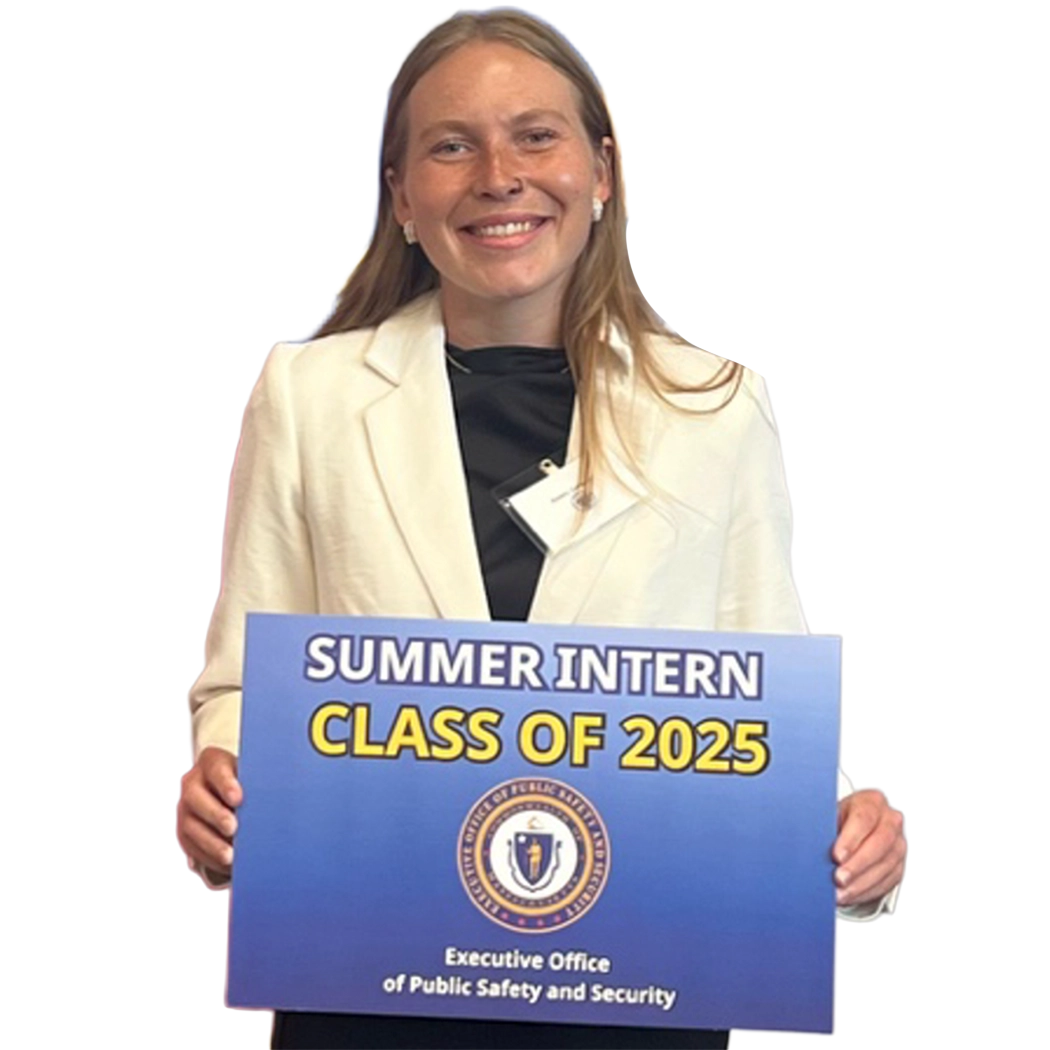
"My internship at the Office of the Chief Medical Examiner in Boston has allowed me to see both the science and legal components of public safety."
Forensic Science

"My internship at the Woonsocket Police Department was so eye-opening. These hands-on opportunities allowed me to fully grasp my love of Forensic Science."
Forensic Science

"The Forensic Science program has given me so much hands-on knowledge. I feel confident about getting a job."
Forensic Science
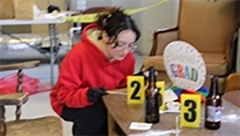
Watch Forensic Science students put their crime scene investigation skills to the test. Mock crime scene exercises provide hands-on experience for real-world forensic careers by combining science, law, and investigation in a dynamic learning environment.
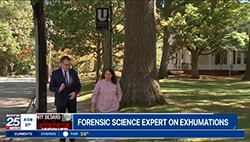
Watch Professor Beth Goodspeed's interview on Boston 25 about a recently resurfaced case in Massachusetts.